Information design is the practice of preparing information so people can use it efficiently and effectively, rather than making stuff that is just attractive or for artistic expression.
The term was first used in the 1970s, and became established in the 1980s, however the prehistory of the practice can be traced back much further.
Information design is often multi-disciplinary, involving not only designers but also, for instance, linguists, writers, psychologists, anthropologists, and ergonomists.
What makes me passionate about information design is that it creates stuff that is useful and that helps people do the things they need to do, whether that is paying a utility bill (paying the right amount, on time), or finding the toilets in a complex building.
An issue that covers all of the design that I do is accessibility or inclusion. Everyone is different and has different needs but, for instance, the requirements of people with visual impairments, or people with dyslexia, or the elderly, or people who do not speak English as their first language can all have a particular bearing on how a project is resolved.
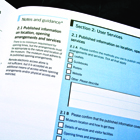
The design of forms is much-researched but there are still a lot of confusing forms. If your organisation produces forms, I would love to help you make them easier to fill in. This will make your customers happier, and collecting accurate data in a timely fashion will help your business run more smoothly.
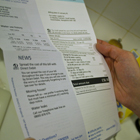
The design of bills and statements has improved in the past few years but some still leave much to be desired. Too often it is difficult to answer the basic question ‘how much do I owe?’ Bills and statements are one of the few pieces of communication that we really must read, they are overlooked as a channel for building brand awareness. If your organisation produces bills and statements, I would love to help you make them work even better for you and the people you send them to.
And of course the reports and other documents that I work on engage different permutations of information design skills depending on the particular project.
To find out more please email me or phone +44 (0)7974 176656.